
How to Remove Soap Scum From Ceramic Tile
Ceramic tile is durable, but grout, polished surfaces, sealers, and adjacent materials can limit which cleaners and tools are appropriate.
7 min readRead guide →
Hard-water scale, limescale and rust-colored deposits can look similar but come from different sources. This hub emphasizes source control, material compatibility and the special risk acids create for natural stone, coatings and some metal finishes.
Ceramic tile is durable, but grout, polished surfaces, sealers, and adjacent materials can limit which cleaners and tools are appropriate.

Remove hard-water residue from quartz countertops without turning a mineral-deposit problem into dulling, chemical damage or unnecessary abrasion.
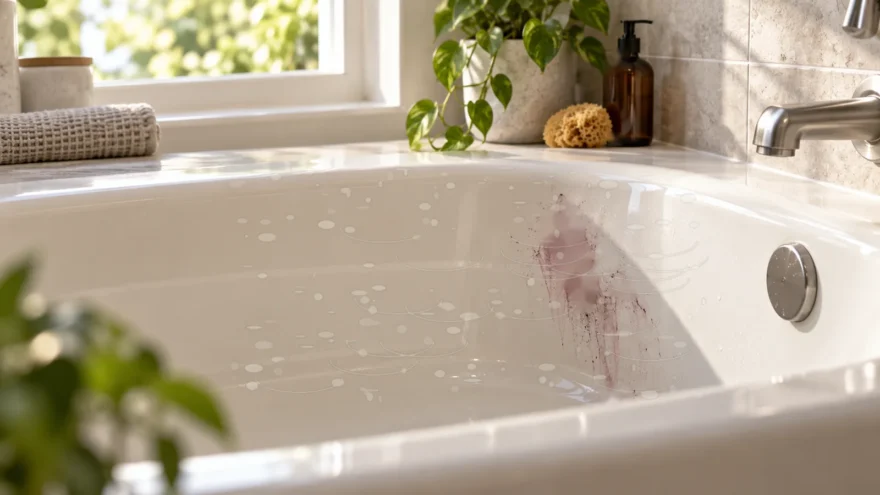
Remove hard water spots from acrylic shower surfaces without defaulting to acids or abrasive scrubbing.

Remove mineral buildup from faucets while accounting for chrome, stainless steel and coated finishes that can be damaged by aggressive acids or abrasives.
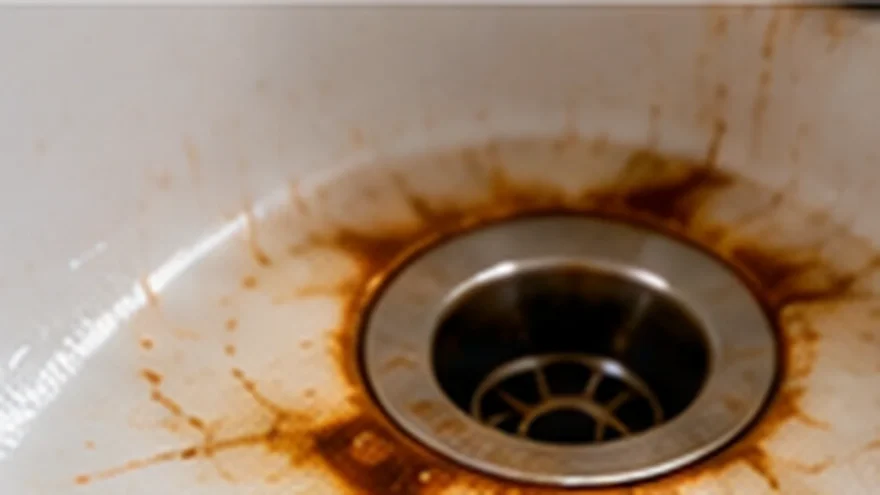
A conservative rust-stain process for intact porcelain glaze, with warnings for refinished sinks, damaged glaze and abrasive tools.

Water spots on shower glass are usually mineral deposits left after droplets evaporate, but persistent cloudiness can also be etched or coating-related.
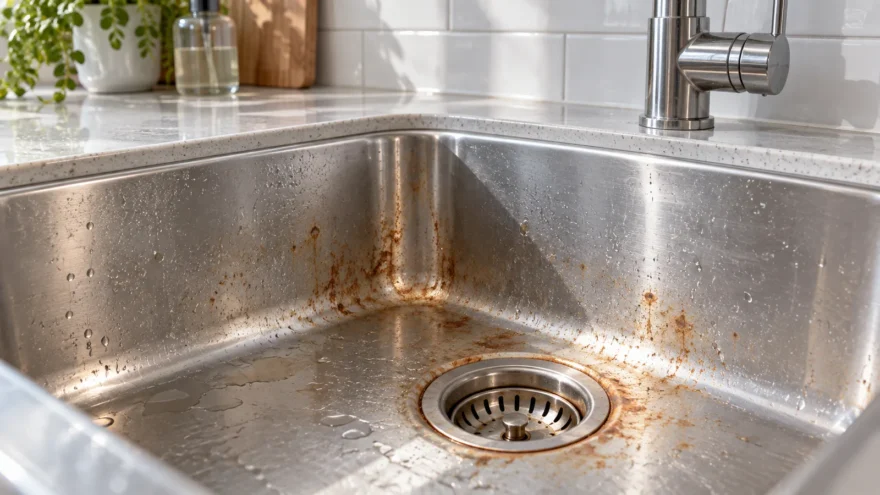
Use a surface-specific, conservative method for rust on stainless steel, with clear stop conditions before the finish is damaged.