
How to Remove Hair Dye From a Porcelain Sink Safely
Remove fresh or dried hair dye from a porcelain sink without scratching the glaze, and learn when the sink may actually be acrylic, composite or refinished.
8 min readRead guide →
Porcelain is low-porosity and highly stain resistant, but polished finishes, grout lines and adjacent materials can change what is safe. This hub covers food stains, permanent inks, adhesive residue and surface haze with nonabrasive escalation.
Remove fresh or dried hair dye from a porcelain sink without scratching the glaze, and learn when the sink may actually be acrylic, composite or refinished.

Use a surface-specific, conservative method for hard water on porcelain, with clear stop conditions before the finish is damaged.

Permanent marker on porcelain needs a controlled material-safe approach. Start gently, protect the finish, test first and escalate only when the surface remains unchanged.
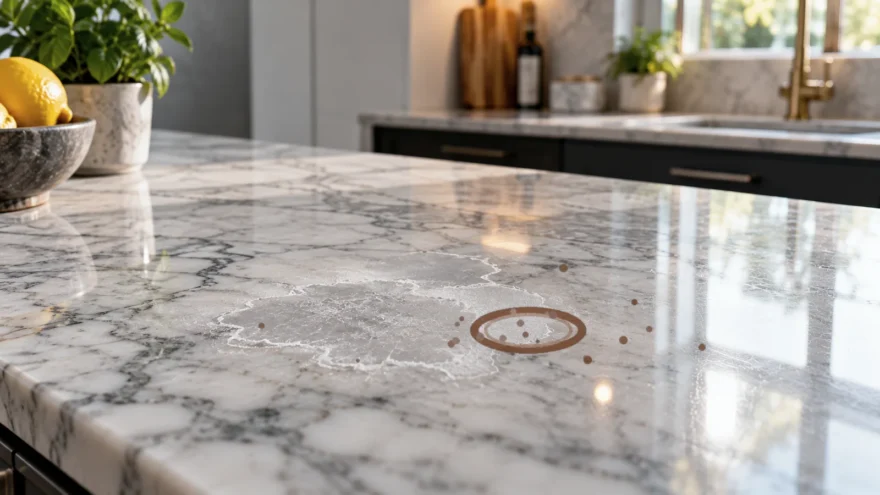
Surface-safe guidance for coffee discoloration on porcelain countertop, including diagnosis, step-by-step escalation, stop signals and material-specific precautions.
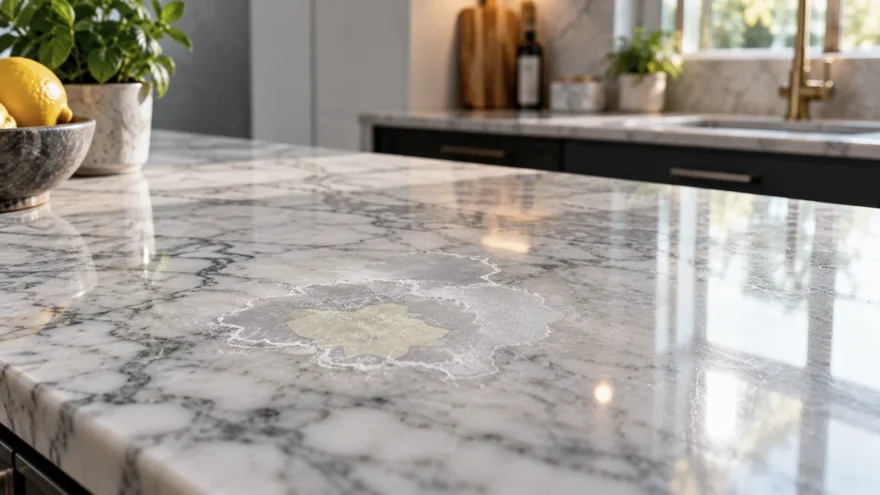
Surface-safe guidance for sticky adhesive or sealer residue on porcelain slab, including diagnosis, step-by-step escalation, stop signals and material-specific precautions.
A conservative rust-stain process for intact porcelain glaze, with warnings for refinished sinks, damaged glaze and abrasive tools.