How to Clean Fingerprint-Resistant Stainless Steel Without Damaging the Coating
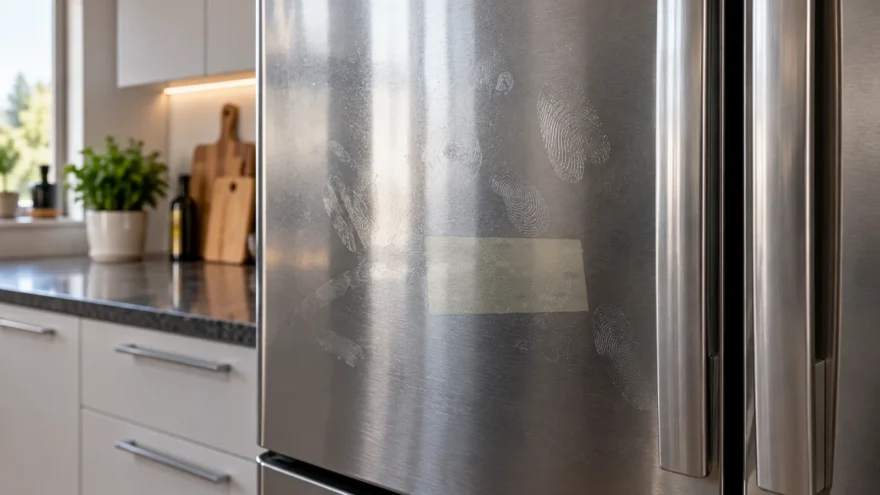
Clean fingerprint-resistant stainless steel as a coated appliance finish, not as ordinary bare stainless steel, to avoid dulling or scratching the clear coat.
Stainless steel care depends on finish type, grain direction and whether the surface has a factory coating. These guides distinguish fingerprints, water spots, rust-colored contamination, adhesive residue and true scratches before recommending a method.

Clean fingerprint-resistant stainless steel as a coated appliance finish, not as ordinary bare stainless steel, to avoid dulling or scratching the clear coat.

Sticker adhesive on stainless steel should be softened and lifted without turning the cleanup into a visible scratch or finish mismatch.

Remove water spots from stainless steel appliances while respecting grain direction and the difference between traditional and coated stainless finishes.

Grease and fingerprints can build a cloudy film on stainless appliances, especially near handles and cooking zones.

Remove mineral buildup from faucets while accounting for chrome, stainless steel and coated finishes that can be damaged by aggressive acids or abrasives.

Diagnose scuffs versus true scratches, identify the grain, and avoid making a stainless-steel appliance finish look worse with random abrasion.

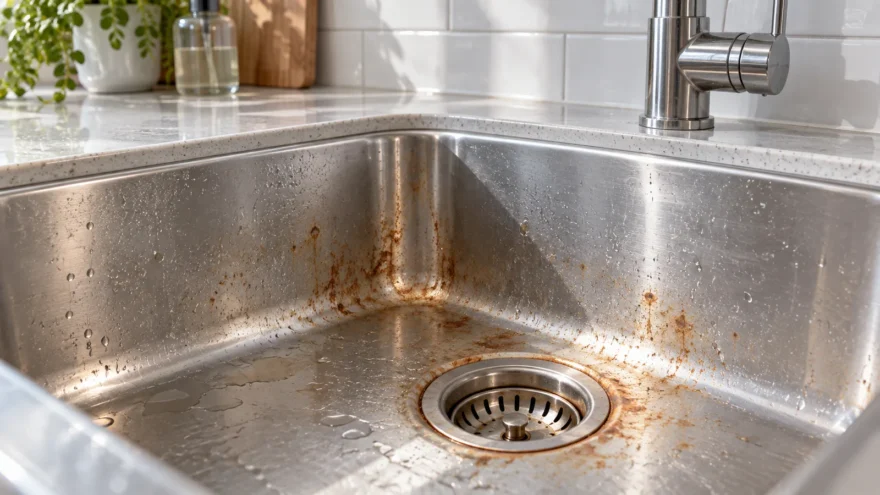
A stainless steel sink looks simple, but grain direction, water minerals, food soils, and abrasive tools can all change the finish.

Use a surface-specific, conservative method for rust on stainless steel, with clear stop conditions before the finish is damaged.