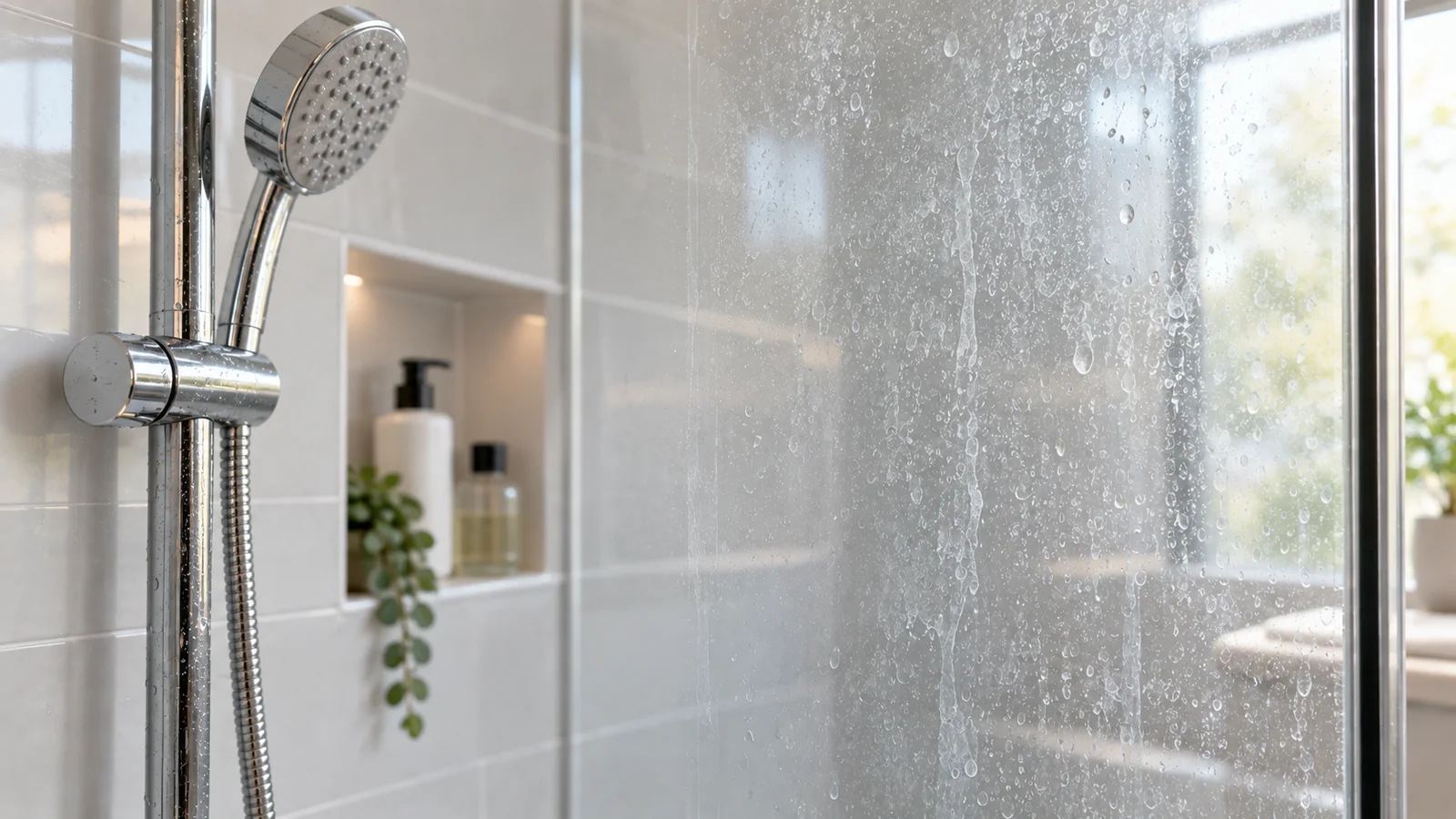
Shower glass collects several layers at once: hard-water minerals, soap residue, body-oil film and sometimes silicone or caulk haze near the edges. Cleaning safely starts by deciding which layer is actually present. Clear tempered glass tolerates more chemistry than acrylic, but coatings, etched patterns and hardware finishes can introduce separate limits. Treat the glass, frame, seals and coatings as a system rather than assuming one cleaner is safe for every part of the enclosure.
Before you start: check the glass and everything touching it
Before you start, confirm that the panel is ordinary shower glass rather than a coated or factory-treated surface, and inspect the edges for silicone, metal trim, stone or tile that may react differently to a cleaner. Test a small area low on the panel first. If natural stone is directly below or beside the glass, protect it before using any acidic mineral-removal step, and stop immediately if the glass develops new haze, rainbowing or a change in feel.
Inspect the glass when it is dry
Let a small section dry completely and look across it in side light. Chalky dots or rings suggest mineral deposits. A smeary film that shifts under a damp microfiber cloth is more likely soap or body-oil residue. A white haze that feels smooth and does not change after ordinary cleaning may be etched glass or coating damage. Knowing the difference before scrubbing prevents wasted effort and unnecessary abrasion.
Remove soap film before attacking mineral scale
If the panel feels slick or greasy, start with the enclosure manufacturer’s routine cleaner or a mild detergent compatible with the glass and coatings. Work from the top down and rinse thoroughly. Soap film can shield mineral deposits, so a descaling product used too early may appear ineffective. Once the organic film is gone, reassess the remaining white deposits instead of stacking products on top of one another.
Use mineral treatment only where the glass allows it
For hard-water buildup, follow the shower-door or coating manufacturer’s guidance. Some coated glass has a specific approved cleaner list and may exclude acidic or abrasive products. Apply the permitted product to a cloth or limited test area, observe the stated contact time, rinse and dry. Short controlled cycles are safer than leaving a descaler in place while working elsewhere in the bathroom.
Protect edges, seals and decorative finishes
The glass may tolerate a cleaner that nearby anodized aluminum, matte-black hardware, natural stone or silicone does not. Keep runoff away from vulnerable trim and do not allow acidic solution to sit in channels. Use a smaller cloth near edges so you can control where the product goes. This is especially important on frameless enclosures mounted next to stone tile.
A scraper is not a default shower-glass tool
Even when glass itself is hard, random blades can catch coating defects, sealant or grit. Do not scrape unless the manufacturer explicitly approves it for the exact glass or coating. Mineral deposits are better addressed by chemistry and dwell time within approved limits. If a raised speck is actually silicone, paint or construction residue, route to the specific residue guidance rather than improvising with a blade.
Tell mineral buildup from permanent etching
Deposits tend to change with treatment: edges soften, roughness decreases or residue transfers to the cloth. Etching does not dissolve because it is a physical change to the glass surface. If the panel is clean and smooth yet remains cloudy in the same pattern, stop escalating. The Damage vs Dirt guide can help distinguish removable scale from permanent surface alteration.
What to avoid
Avoid steel wool, abrasive powders, dirty scrub pads and mixed chemicals. Do not combine acid descalers with chlorine products. Avoid soaking seals or metal tracks in concentrated cleaner. If the enclosure has a protective treatment, do not assume automotive glass products, magic erasers or polishing compounds are compatible.
When to stop cleaning
Stop when the panel no longer feels coated and no more residue transfers, even if a pale ghost remains. Also stop if the glass develops a different sheen, the coating looks patchy, hardware discolors or sealant softens. At that point the remaining defect may be etching, scratching or coating loss rather than dirt. Further cleaning raises the chance of damaging adjacent components without improving clarity.
Reduce future water spotting
A quick squeegee after showering removes much of the water that would otherwise evaporate and leave minerals. Improve ventilation so the enclosure dries sooner, and periodically clean light soap film before it combines with scale. If your water is very hard, more frequent mild maintenance is safer than occasional heavy descaling.
Use targeted guides for specific shower-glass problems
Water spots, soap scum, caulk residue and hard-water scale can look similar but are not the same task. Use the Fix Finder to match the symptom to glass and route to the most specific guide. That keeps the cleaning method proportionate to the actual buildup.
Judge the finished panel only after drying
Cleaner film and rinse water can hide streaks while the glass is wet. Dry with a clean lint-free cloth and inspect from two angles before repeating a treatment. If the result is even and transparent, return to routine care rather than adding another product “for shine.”
Clean tracks and bottom seals separately
Door tracks and lower seals collect concentrated soap residue, hair and mineral-rich water that can migrate back onto freshly cleaned glass. Use the enclosure maker’s recommended method for those parts rather than letting glass cleaner pool in the channel. Removable seals should only be taken off when the design permits it. Keeping the track clean reduces the dirty runoff that otherwise creates a recurring band along the bottom of the panel.
Use a two-cloth finish to reveal remaining film
After rinsing, wipe once with a clean damp microfiber cloth and then dry with a second lint-free cloth. If the dry cloth drags or picks up residue, detergent or loosened soap is still present. If it glides smoothly but white dots remain, mineral scale is more likely. This simple separation step gives better information than immediately applying another product to a still-wet panel.
Consider the water source when spotting returns quickly
Fast recurring spots are often a maintenance issue rather than a failed cleaning method. Very hard water can leave visible deposits after only a few drying cycles. A whole-home softener or other water-treatment decision is outside the scope of a glass-cleaning guide, but knowing that mineral load is high helps set realistic expectations. In that situation, squeegeeing and drying frequency become part of the solution.
Coated glass should have its own maintenance record
If the shower glass carries a factory coating, note the coating name, installation date and approved cleaner list. Some treatments have renewal or warranty conditions that depend on care. Keeping that information prevents well-meaning future cleaning from stripping or dulling a surface treatment that was meant to reduce spotting in the first place.
Reassess after complete overnight drying
Very wet bathrooms can make glass look hazy shortly after cleaning because fine droplets condense again. If the panel seems unclear immediately after a hot shower, inspect it again when the room and glass have fully dried. A persistent pattern in the exact same places is more meaningful than temporary condensation.
Make a simple maintenance schedule
For a busy shower, separate daily drying from periodic cleaning. A squeegee or quick towel dry after use reduces mineral loading, while a weekly or biweekly approved cleaner handles soap film before it hardens. This division keeps each cleaning session short and lowers the temptation to use stronger chemistry. If the enclosure is rarely used, adjust the interval based on visible buildup rather than following a rigid calendar.
Keep replacement seals and coatings in mind
If a seal is permanently discolored or a protective coating has failed, cleaning cannot restore it. Replacing a worn seal or renewing a compatible coating may be the correct maintenance step once ordinary soil is removed.
Reference set verified 2026-09-16. Manufacturer/material-owner guidance prioritized; exact model, finish and product instructions take precedence.